
AI Vision Inspection
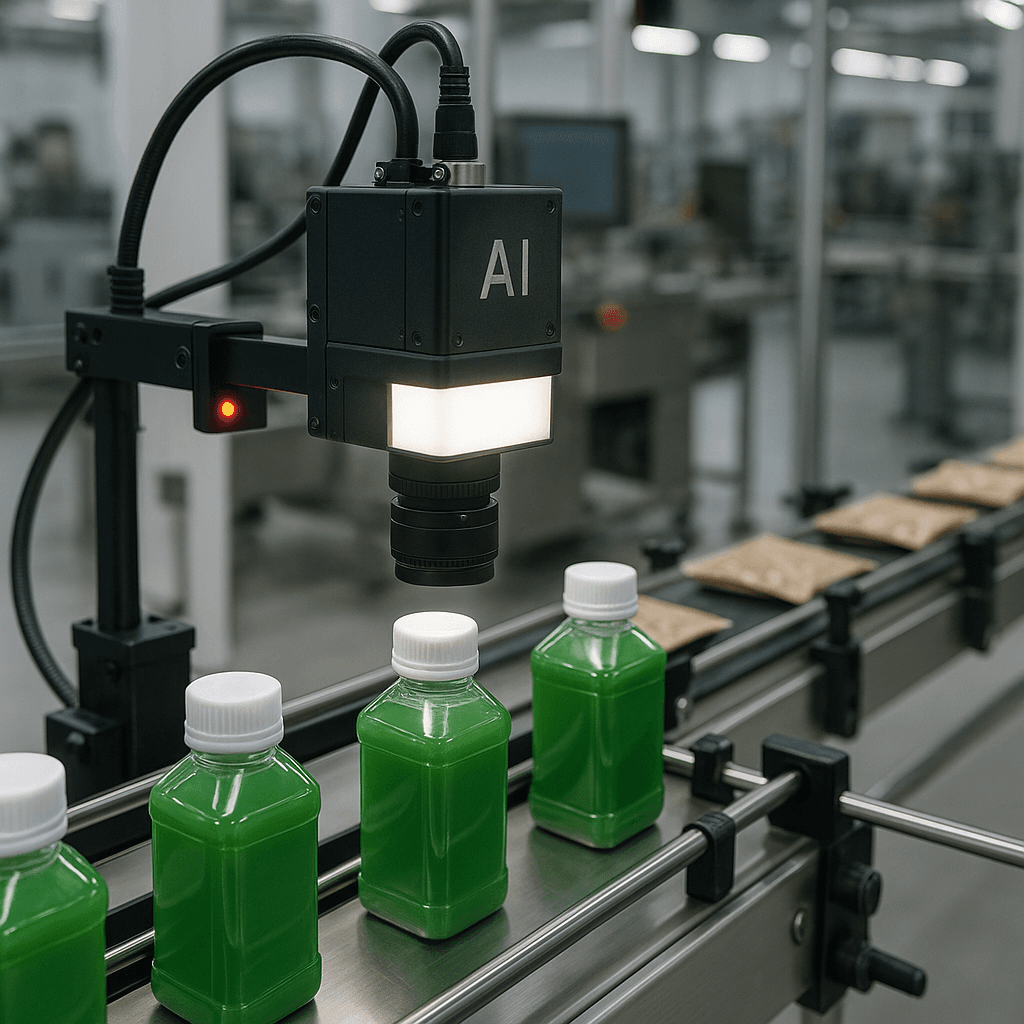
Machine vision and AI for defect detection, packaging quality, and inline reject handling.
Tell us about your inspection process. If another approach fits your description better, we will say so.
Technology Overview
Machine vision and AI for defect detection, packaging quality, and inline reject handling.
Problems It Commonly Solves
- Manual inspection cannot keep pace with line speed; escaped defects reach customers.
- Common application: Packaging defect detection
- Common application: Seal and label verification
- Common application: Surface defect screening
Suitable Conditions
- Defect classes are visually distinguishable at line speed
- Manual inspection is a bottleneck or audit weakness
Constraints to Investigate
- Defect requires destructive or internal measurement
- Extreme SKU mix without manageable changeover plan
Project Readiness Check
These questions ask whether you already have the information. Answer yes, no, or not sure. A no means information to gather. It does not mean the automation opportunity failed.
1. Do you know which defects you want to catch and which are acceptable?
Why it matters: Defect classes define the inspection, not the camera brand.
2. Do you know the line rate and how products are presented to inspection?
Why it matters: Rate and presentation drive optics and reject handling.
3. Do you know the lighting and reject-handling constraints?
Why it matters: Lighting and reject path are part of the scope.
4. Do you have sample parts or images that show good and bad product?
Why it matters: Samples are the practical way to test an inspection idea.
5. Do you know how a false reject would be handled on the line?
Why it matters: False rejects change whether the station helps or slows the line.
Inputs required for preliminary assessment
Checklist of core and supporting inputs for AI Vision Inspection. Copy, print, or save locally; open Studio to attach this Technology to an Automation Project.
Required core inputs
Optional supporting inputs
Evidence to gather
- Good and bad sample images across SKUs
- Defect taxonomy with accept/reject rules
- Line speed and presentation photos
- Existing reject / PLC interface notes
This pathway is an early planning guide. It is not a final feasibility review, engineering design, safety certification, supplier quote, or statement of work.
Main Technical Variables
- Defect types and reject criteria
- Line speed / throughput
- Product presentation and orientation
- Reject / PLC integration needs
- Sample images / labelled defects
- Cameras and controlled lighting enclosure
- AI model development / labelling
- Reject divert mechanics
Typical Solution Stack
- Industrial cameras and controlled lighting
- AI vision inference (edge or server)
- Reject divert and PLC integration
- Defect review HMI and logging
Required Delivery Roles
- Vision systems integrator
- ML / vision engineer
- Controls integrator
Common Cost Drivers
- Cameras and controlled lighting enclosure
- AI model development / labelling
- Reject divert mechanics
- PLC / line integration
Cost and schedule usually move with: Cameras and controlled lighting enclosure; AI model development / labelling; Reject divert mechanics; PLC / line integration. Treat any public ranges as illustrative planning context only. They are not a quote.
Common Project Risks
- Insufficient labelled defect samples for reliable model training.
- Presentation or lighting variability drives false rejects.
Site-Readiness Considerations
- Stable product presentation at inspection point
- Network and power for cameras and inference
- Operator station for defect review
- Confirm reject divert timing does not create pinch or jam hazards.
- Validate any regulated label/date-code compliance needs separately if applicable.
Validation Activities
- False-reject rate benchmarked on production samples
- Lighting enclosure validated across SKU range
- Reject divert timing confirmed with PLC
Scope to Confirm With Suppliers
- Confirm which equipment, tooling, and software are included in the proposal.
- Confirm whether installation, commissioning, and operator training are included.
- Confirm which utilities, guarding, fixtures, and site work stay with your team.
- Confirm spare parts, documentation, and the support period.
- Confirm how acceptance will be tested before handover.
Example Acceptance Criteria
- Agree the test parts, rate, and quality checks before installation.
- Agree who signs off and what happens if a test is not met.
Questions to Ask Suppliers
- What defect types can you demonstrate on our representative parts or images?
- What lighting, optics, and presentation does the proposed inspection assume?
- What false-reject and false-accept performance should we plan to validate?
- How are rejected parts removed without stopping the line longer than we can accept?
- Which cameras, software, installation, and training are included?
- How will we agree and test acceptance criteria?
Related Automation Use Cases
Related Listed Providers
Browse listed providers related to this pathway in alphabetical order. Listings are basic public company information. They are not rankings, endorsements, fit scores, or recommendations.
Browse listed providers for this technologyInnovation Peer reviews your Automation Project privately with an Innovation Peer advisor. No supplier introduction happens without your approval.
Tell us about your inspection process. If another approach fits your description better, we will say so.