
Autonomous Forklifts
Automated lift trucks for pallet movement in warehouse and plant aisles.
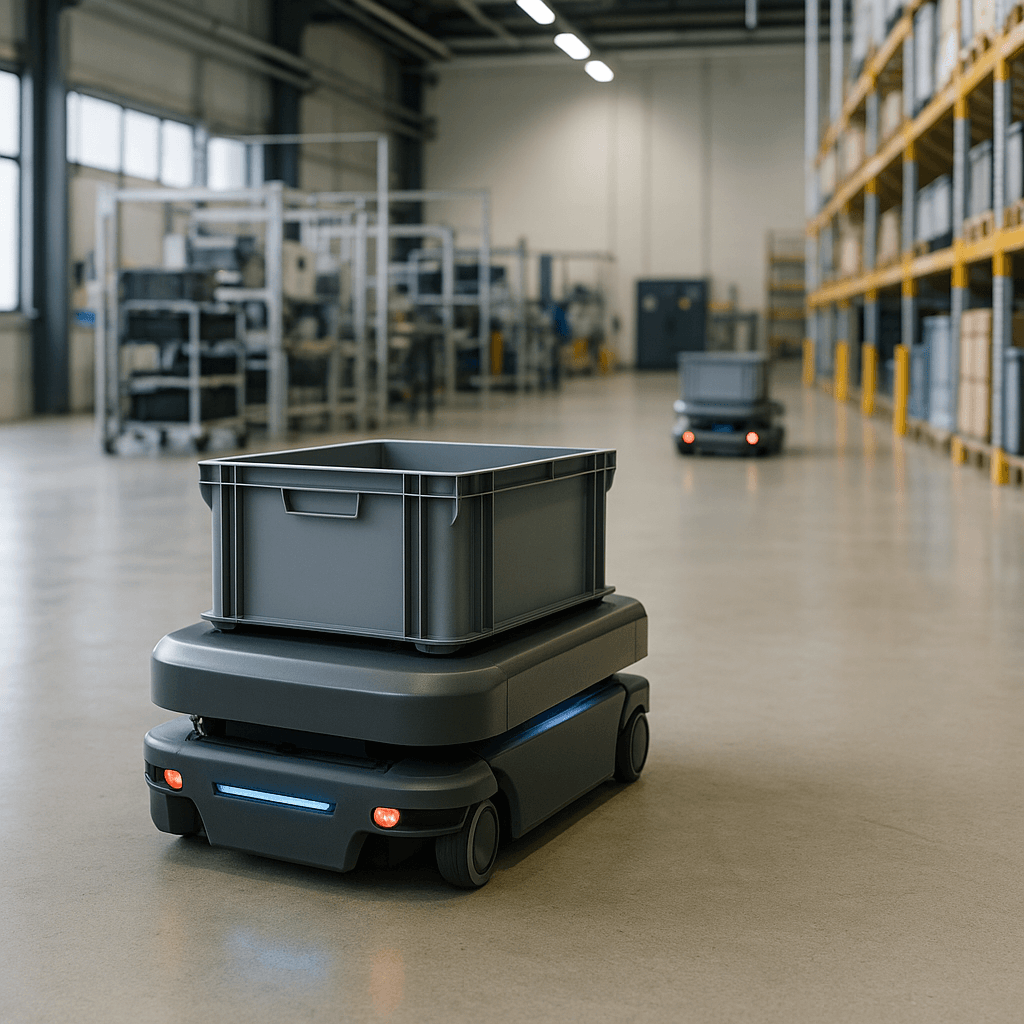
Tell us about your process for Autonomous Forklifts. If another approach fits your description better, we will say so.
Technology Overview
Automated lift trucks for pallet movement in warehouse and plant aisles.
Problems It Commonly Solves
- Reduce manual effort, variability, and downtime associated with autonomous forklifts projects.
- Common application: Pallet putaway
- Common application: Raw material delivery
- Common application: Finished goods staging
Suitable Conditions
- Structured aisles with pallet workflows suitable for automation
Constraints to Investigate
- Outdoor or uncontrolled mixed traffic without safety zoning
Project Readiness Check
These questions ask whether you already have the information. Answer yes, no, or not sure. A no means information to gather. It does not mean the automation opportunity failed.
1. Do you know what happens in the process today and what you want to improve?
Why it matters: A plain description of the current task is the starting point for any comparison.
2. Do you know the rate, volume, or cycle time you need to plan for?
Why it matters: Rate changes which approaches are worth comparing.
3. Do you know the product or part variation the system would have to handle?
Why it matters: Variation affects tooling, changeover, and whether a simpler change is enough.
4. Do you know the space, utilities, and access available on site?
Why it matters: Layout and services decide what can physically fit.
5. Do you know what a useful result would look like for this task?
Why it matters: A concrete outcome keeps the next step focused.
Inputs required for preliminary assessment
Checklist of core and supporting inputs for Autonomous Forklifts. Copy, print, or save locally; open Studio to attach this Technology to an Automation Project.
Required core inputs
This pathway is an early planning guide. It is not a final feasibility review, engineering design, safety certification, supplier quote, or statement of work.
Main Technical Variables
- Pallet types and weights
- Racking and aisle dimensions
- Shift volumes
Typical Solution Stack
- Autonomous lift truck fleet
- Fleet management and safety zones
- WMS integration or manual dispatch
- Charging infrastructure
Required Delivery Roles
- Autonomous lift vendor
- Safety reviewer
- Warehouse operations lead
Common Cost Drivers
- No published CAD planning range is on file for this pathway. Cost and timeline depend on site readiness, integration scope, and validation effort. This is not a quote.
Common Project Risks
- Aisle geometry incompatible with autonomous navigation
Site-Readiness Considerations
- Aisle width and floor flatness assessed
- Battery charging infrastructure
Validation Activities
- Safety zones and speed limits validated
- Integration with WMS or manual triggers confirmed
Scope to Confirm With Suppliers
- Confirm which equipment, tooling, and software are included in the proposal.
- Confirm whether installation, commissioning, and operator training are included.
- Confirm which utilities, guarding, fixtures, and site work stay with your team.
- Confirm spare parts, documentation, and the support period.
- Confirm how acceptance will be tested before handover.
Example Acceptance Criteria
- Agree the test parts, rate, and quality checks before installation.
- Agree who signs off and what happens if a test is not met.
Questions to Ask Suppliers
- What throughput can the proposed system achieve with our parts, changeovers, and operating pattern?
- What footprint, utilities, and access space will the system need?
- Which equipment, installation, training, and site work are included in the proposal?
- What part presentation or product variation does the process assume?
- How will operators recover from a stop, fault, or mispositioned part?
- How will we agree and test acceptance criteria before handover?
Related Automation Use Cases
Related Listed Providers
Browse listed providers related to this pathway in alphabetical order. Listings are basic public company information. They are not rankings, endorsements, fit scores, or recommendations.
Browse listed providers for this technologyInnovation Peer reviews your Automation Project privately with an Innovation Peer advisor. No supplier introduction happens without your approval.
Tell us about your process for Autonomous Forklifts. If another approach fits your description better, we will say so.