
Robotic Painting / Coating for Canadian Manufacturers
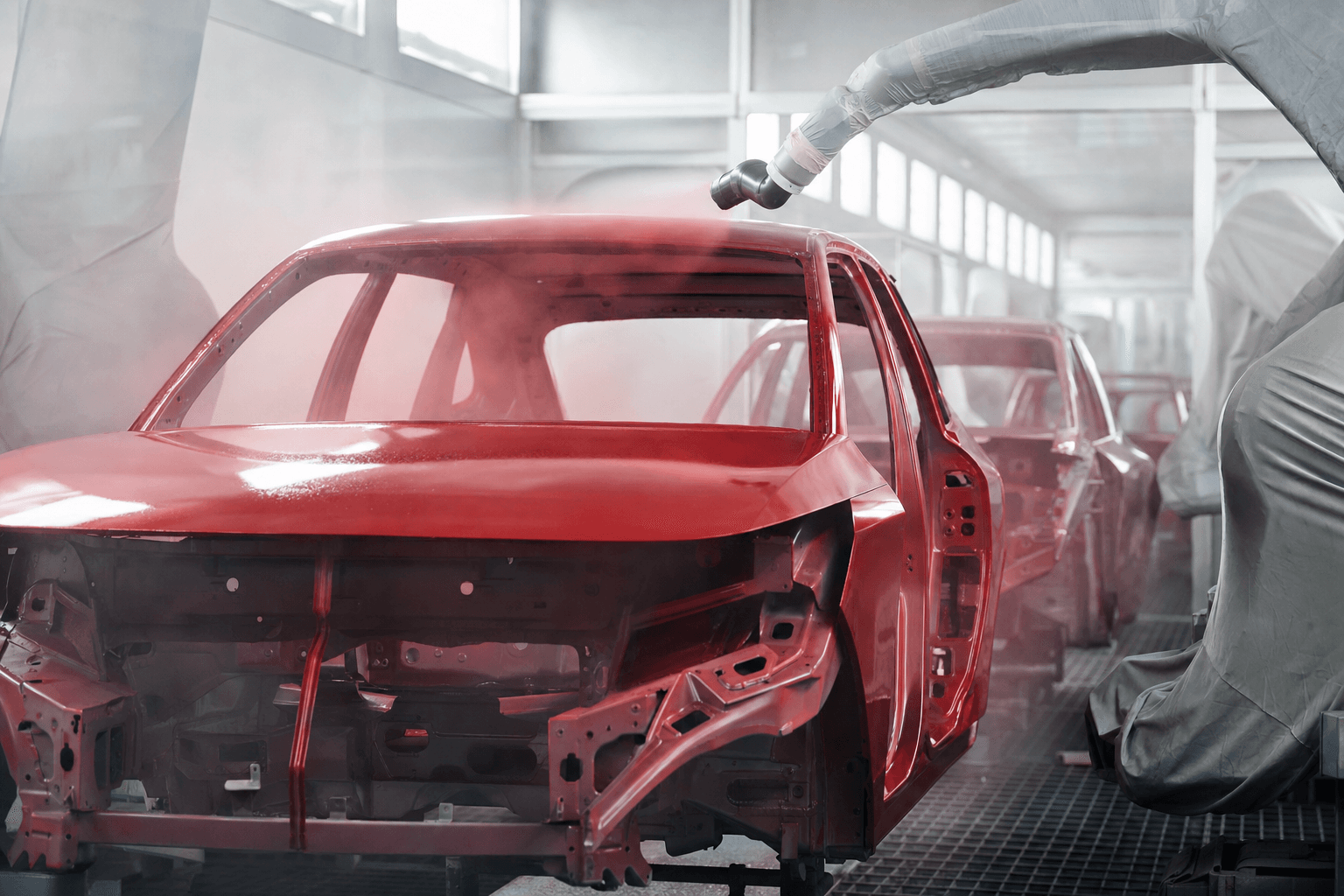
Robotic spray, powder, or liquid coating in booths with ventilation and finish controls.
Tell us about your coating process. If another approach fits your description better, we will say so.
Technology Overview
Robotic spray, powder, or liquid coating in booths with ventilation and finish controls.
Problems It Commonly Solves
- Inconsistent film build, overspray waste, ergonomic spray exposure, and booth labour bottlenecks on repeatable coating jobs.
- Common application: Powder coating lines
- Common application: Liquid spray paint booths
- Common application: Primer and topcoat sequences
- Common application: Repeatable rack-painted assemblies
Suitable Conditions
- Repeatable part geometry in a controlled booth
- Defined coating chemistry (powder, liquid, or specialty)
- Known film thickness / finish targets
- Colour mix compatible with available purge capacity
Constraints to Investigate
- Daily high-mix colour changes without purge capacity
- Artistic or one-off finish work with no repeatable path
- No booth or inadequate ventilation / grounding infrastructure
Project Readiness Check
These questions ask whether you already have the information. Answer yes, no, or not sure. A no means information to gather. It does not mean the automation opportunity failed.
1. Do you know the coating type, finish target, and colour-change pattern?
Why it matters: The finish spec defines the process more than the robot does.
2. Do you know how parts are racked, masked, and presented?
Why it matters: Racking and masking often decide whether automation helps.
3. Do you know the booth ventilation and site services already in place?
Why it matters: Existing booth services change what a proposal must include.
4. Do you know the production rate the booth needs to hold?
Why it matters: Rate sets the comparison between process changes and automation.
5. Do you know how rework and touch-up are handled today?
Why it matters: Touch-up labour stays in the picture until it is measured.
Inputs required for preliminary assessment
Checklist of core and supporting inputs for Robotic Painting / Coating / Finishing. Copy, print, or save locally; open Studio to attach this Technology to an Automation Project.
Required core inputs
Optional supporting inputs
Evidence to gather
- Booth photos and airflow notes
- Coating spec / film thickness targets
- Part racking photos and sizes
- Colour change frequency and purge method
This pathway is an early planning guide. It is not a final feasibility review, engineering design, safety certification, supplier quote, or statement of work.
Main Technical Variables
- Coating type (powder / liquid / specialty)
- Part geometry and racking
- Booth airflow / ventilation requirements
- Finish / film thickness targets
- Colour change / SKU mix
- Booth ventilation and reclaim
- Robot and applicator package
- Racking / conveyance
Typical Solution Stack
- Painting robot and applicator package
- Booth ventilation and reclaim
- Part fixturing / racking and conveyance
- Offline path programming
- Grounding continuity and finish inspection sampling
Required Delivery Roles
- Finishing integrator
- Booth ventilation partner
- Environmental reviewer
Common Cost Drivers
- Booth ventilation and reclaim
- Robot and applicator package
- Racking / conveyance
- Colour change / purge system
Cost and schedule usually move with: Booth ventilation and reclaim; Robot and applicator package; Racking / conveyance; Colour change / purge system. Treat any public ranges as illustrative planning context only. They are not a quote.
Common Project Risks
- Grounding issues on large assemblies degrade finish quality.
- Ventilation upgrades required beyond robot scope.
- Daily high-mix colour changes without purge capacity.
- Environmental permit or VOC limits constrain coating chemistry
Site-Readiness Considerations
- Booth ventilation capacity confirmed
- Racking access for robot reach envelope
- Grounding and explosion-prevention requirements reviewed
- Environmental / VOC permitting status known
- Validate environmental / VOC permitting before coating chemistry lock.
Validation Activities
- Film thickness targets validated on sample parts
- Overspray and reclaim plan confirmed
- Grounding continuity checked on largest assemblies
Scope to Confirm With Suppliers
- Confirm which equipment, tooling, and software are included in the proposal.
- Confirm whether installation, commissioning, and operator training are included.
- Confirm which utilities, guarding, fixtures, and site work stay with your team.
- Confirm spare parts, documentation, and the support period.
- Confirm how acceptance will be tested before handover.
Example Acceptance Criteria
- Agree the test parts, rate, and quality checks before installation.
- Agree who signs off and what happens if a test is not met.
Questions to Ask Suppliers
- Can you demonstrate finish quality on our representative parts and colours?
- What booth, ventilation, and grounding conditions does the proposal assume?
- How are colour changes, masking, and racking handled?
- Which application equipment, installation, and training are included?
- What touch-up or rework sits outside the proposal?
- How will we agree and test film-build and appearance criteria?
Related Automation Use Cases
Related Technologies
Browse all Automation Use Cases for adjacent process patterns.
Automation Suppliers for this technology
Browse listed providers related to this pathway in alphabetical order. Listings are basic public company information. They are not rankings, endorsements, fit scores, or recommendations.
Browse Automation Suppliers for this technologyInnovation Peer reviews your Automation Project privately with an Innovation Peer advisor. No supplier introduction happens without your approval.
Tell us about your coating process. If another approach fits your description better, we will say so.
Questions from the notes on this page
What problems does Robotic Painting / Coating commonly address?
Inconsistent film build, overspray waste, ergonomic spray exposure, and booth labour bottlenecks on repeatable coating jobs. Common application: Powder coating lines. Common application: Liquid spray paint booths. Common application: Primer and topcoat sequences. Common application: Repeatable rack-painted assemblies.
When is Robotic Painting / Coating a reasonable fit?
Repeatable part geometry in a controlled booth. Defined coating chemistry (powder, liquid, or specialty). Known film thickness / finish targets. Colour mix compatible with available purge capacity.
When might Robotic Painting / Coating be a poor fit?
Daily high-mix colour changes without purge capacity. Artistic or one-off finish work with no repeatable path. No booth or inadequate ventilation / grounding infrastructure.
What should you know about cost before investing in Robotic Painting / Coating?
Cost and schedule usually move with: Booth ventilation and reclaim; Robot and applicator package; Racking / conveyance; Colour change / purge system. Treat any public ranges as illustrative planning context only. They are not a quote.